
The Days of Picking Produce are Numbered
After more than a century of catering to affluent Manhattanites, Lord & Taylor closed its flagship store on Fifth Avenue earlier this month. America’s oldest department store chain dates to 1824, but its contemporary incarnation has as little depth and authenticity as its once-renowned window displays. A particularly fitting sign of the times? The Italian Renaissance building constructed in 1914 is now slated to become the world’s largest WeWork.
It would be easy to dismiss Lord & Taylor’s end as yet another example of brick-and-mortar retail being displaced in favor of internet convenience. The store’s closing certainly bore familiar (literal) signs: disheveled product displays, hasty markdowns, and depressingly empty display cases. Yet, many retail brands continue to thrive: bookstores are even making comeback in spite of Amazon.
Lord & Taylor’s slow death is not homicide by internet, it’s suicide by mismanagement. Changing times, customers, and conditions are faced by any business with a reasonable lifespan. Successful brands do more than find a way to communicate what is unique and valuable about themselves: they keep those core, guiding principles consistent and use them to navigate the turmoil.
In its heyday, Lord & Taylor was a palace of luxury consumerism. The brand’s value proposition was a unique, enjoyable shopping experience: a promise that the exercise of commerce could be enjoyable, not just an end unto itself. Customer perception of department stores indicates that proposition has changed. Even Lord & Taylor must feel differently about itself: the brand’s formerly exclusive and “premium” offerings are now available a Walmart online storefront.
The value proposition of the modern department store has been reduced to price and convenience. This shift in strategy may coincide with the explosion of ecommerce, but that’s a lazy excuse. In 2018, ecommerce still only accounted for 10 percent of all retail, and projects to remain below 15 percent even in 2021.
As Wodenworker Hannah Landers has written, the real story is that of an entire industry devaluing itself by removing the emotional connection it had with customers, and instead focusing entirely on features and benefits. In a naïve attempt to compete against the threat of disruption, Lord & Taylor chose to combat the internet on the territory where it would be least competitive: wider selection and lower prices. This approach is foolhardy for most brands with a physical presence, but is particularly disingenuous for a brand built on the experience of luxury.
What allows brands to endure periods of rapid change is self-awareness about what truly makes them different in the eyes of customers, and finding innovative ways to deepen that connection. Brands may have historically thought of this as their unique selling proposition, but such a product-driven (and nakedly commercial) approach lacks the emotional depth that creates real connection.
Every brand must be rooted in the emotional bond they share with their customers. This comes from the journey great brands share with their customers: they both inhabit the same fundamentally broken and damaged world, and feel a pain that must be rectified. Brands who mentor and guide customers to resolve these deep problems share in a catharsis that engenders loyalty and sparks evangelism.
The storytelling arc brands should leverage is neither new nor novel. But, articulating it in a way that’s clear, compelling, and memorable is vital — and wholly necessary for adherence during periods of rapid change or growth. It’s thanks to that lack of compelling messaging that Americans today buy more food at Walmart than anywhere else.
Regional supermarket chains such as Aldi, Albertson’s, and Shaw’s have been the primary way American families feed themselves since the country’s postwar suburbanization. For decades, they’ve benefitted from little disruption or change. The problem with this approach is embedded in the ubiquitous printed shoppers that advertise each week’s meat and produce specials.
The brand promise of the supermarket began where Lord & Taylor’s ended: price, selection, and convenience. With no need to focus on building enduring, emotional connections with customers, grocers have left themselves open to competitors who can deliver the same features and benefits more effectively.
Today, Walmart controls 23 percent of the US grocery market, and its grocery division is among its best performing. Walmart’s size and supply chain prowess ensures it can beat traditional supermarkets on price, and its wider selection of goods allows it to expend the selection benefit beyond grocery items.
Amazon’s 2017 acquisition of Whole Foods brought another market entrant with a similar strategy. Already, Amazon has lowered Whole Foods prices so as to obsolete their discount 365 chain. And, as the Whole Foods and Amazon brands become more fully integrated, they are expanding product selection in store, and integrating it with orders from its website. Both stores offer same-day home delivery — Walmart already does it in 40 percent of its US stores.
Walmart has long-built the core of its story around pricing, and Amazon has erected its own around rapid delivery of goods. Delivering on these promises, which mirror those the regional grocer has relied on for decades, invites the type of comparison shopping that will never end well for the smaller competitor.
Listening to supermarket CEO’s talk about Walmart and Whole Foodsis a facsimile of how retailers derided the internet’s disruption of their business. Grocers point to unfair competitive practices, yet also seem eager to engage in battle on the opponents’ terms: seeking ways to lower prices and increase selection. What they must do is what they should have done years ago: examine why their customers value their brands, and reorient their story around that.
These chains continue to lean into pricing and selection, and are strangely resistant to evolution. Many still have outdated store footprints, dim fluorescent lighting, and little in the way of customer experience. There’s no promise of anything to the customer beyond the acquisition of supplies for sustenance — if that’s the extent of the promise, it makes sense consumers would look elsewhere.
But those ready to declare the death of the marketare perhaps being a bit premature.
Research indicates 80 percent of supermarket sales come from product lines customers prefer to inspect personally. Like other retail brands thriving today, there is an opportunityto cater to those who want an in-store experience. Success means understanding the true nature of the customer’s pain point: what can an individual brand offer that doesn’t exist elsewhere? And how can it be presented in a compelling manner?
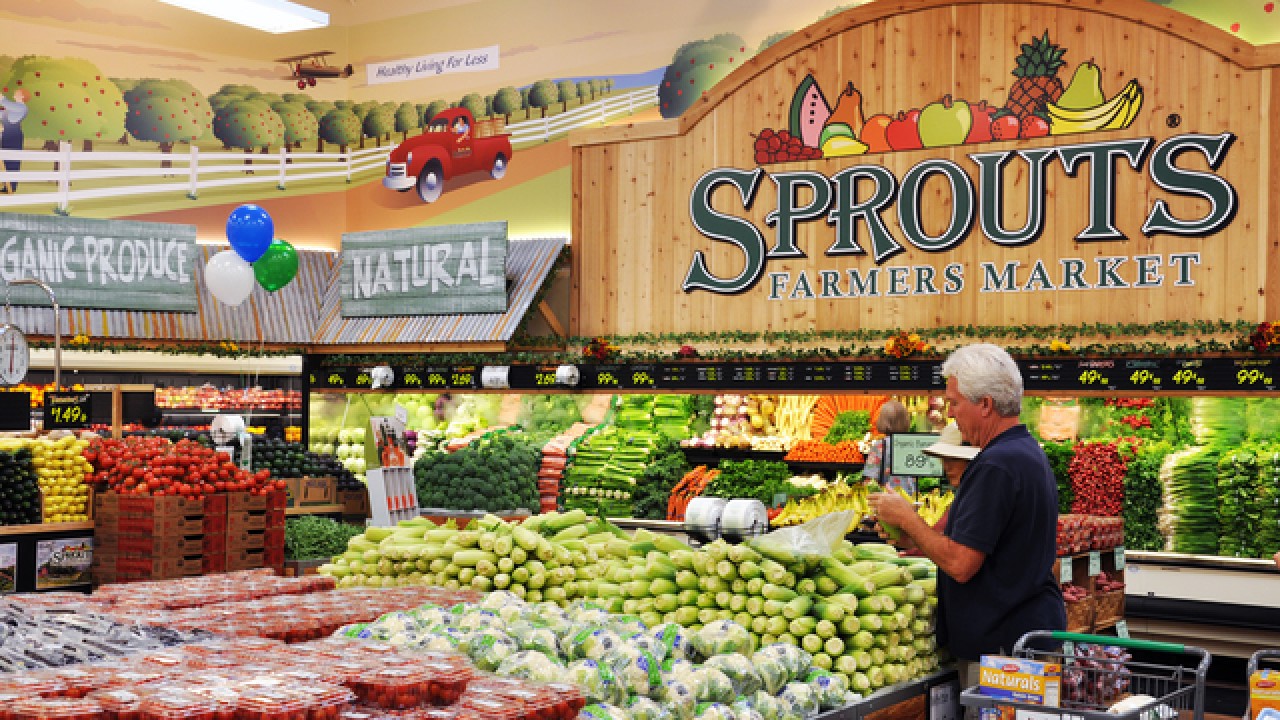
Ask Sprouts Farmer’s Markets. Sprouts has more than doubled in sizesince its 2013 initial public offering. The brand has managed to build a powerful connection with shoppers not around pricing or breadth of product (it is more expensive than traditional markets, and has a more limited product selection), but rather around its proud alignment with customer values. Sprouts emphasizes its relationship with suppliers and customers, and reinforces that through the in-store experience. Consumers may pay more at Sprouts, but it’s money they feel good about spending — and it makes them want to return.
Sprouts isn’t unique in this approach. Mom’s Organic Market has an almost cult-like followingthat’s been built around a similar ethos. And both brands are treading a path worn by the original iteration of Whole Foods (pre-Amazon). In each case, consumers show not only a willingness, but an enthusiasm, to eschew broader selection and the lower prices of competitors.
Unfortunately for traditional supermarkets, they remain stuck in the middle. They lack the scale and power of Amazon or Walmart to deliver on their brand story, and are missing the authentic connection that drives niche brands forward. As any disciple of Mister Miyagi knows, the middle of the road is no place to be.
Brands can’t control when their markets will become disrupted, when the customers will evolve, or if a competitor like Amazon will enter the space. What they can control is the story they choose to tell about themselves, and how it is delivered to their customers in a way that’s clear, compelling, and memorable. A refusal to invest in that effort may unfold differently across industries, but leads to the same end: losing customers to someone else.
Frequently Asked Questions
Most branding initiatives fail because the organization never had a designed path to move from strategy to execution. A great story is only the beginning. If the CEO cannot point to the specific change the narrative makes for the company’s strategy, the story never leaves the boardroom. If leadership does not model the new narrative before asking the rest of the organization to adopt it, the change stalls. And if team members are never given the tools, the training, and the ongoing coaching to carry the story into their daily work, the investment produces collateral without producing alignment. Up to 80 percent of strategic branding work fails for these reasons. The 20 percent that succeed are the ones that treat narrative transformation as a change management challenge from day one.
Three things separate strategic plans that get executed from the ones that sit on a shelf.
Treat the plan as part of a broader narrative transformation by using a deliberate change management approach. Woden’s Transformation Journey gives organizations a six-phase framework for deploying both the brand story and the strategic plan across every team.
Align the organizational structure with the plan by creating cross-functional teams dedicated to specific objectives and assigning board or management responsibilities that reinforce the plan’s priorities.
Third, assign a specific owner to each objective in the plan. Accountability at the individual level keeps execution at the forefront and prevents Narrative Drift.
A successful strategic plan does not happen by accident. It happens when the right narrative foundation, the right structure, and the right ownership exist from the start.
Learn how Woden’s Transformation Journey drives plan execution
Lifestyle positioning works by giving buyers a story about themselves that they want to believe and a product that lets them signal that story to the world. The most effective lifestyle brands understand that buyers are not making purchasing decisions based on taste, ingredients, or price. They are making decisions based on how the purchase makes them feel about themselves and how it makes others see them. Dos Equis understood that young beer drinkers wanted to be seen as worldly and interesting at a time when the category was offering them nothing to aspire to. White Claw understood that a new generation of drinkers wanted a product that signaled both social ease and health consciousness without sacrificing either. The brands that built the deepest emotional connections were the ones that identified a specific self-perception their buyer wanted to inhabit and built every element of their brand around making that aspiration feel real and attainable. For any brand in any category, the principle is the same. When buyers see themselves in your story, they stop comparing you to alternatives and start seeing you as part of who they are.