
Punchy’s messaging methodology is one of the most well-known approaches to B2B tech messaging. Founder Emma Stratton’s book Make It Punchy made simple, jargon-free, human-sounding language the standard against which companies measure their messaging. Punchy’s model is built around sharper, clearer sentences, delivered through a research phase and a pair of workshops. This has real limitations for B2B leaders who need a story that travels into a full narrative that carries sales, marketing, customer success, and company culture through a complex, multi-stakeholder buying journey.
This guide covers the most credible alternatives and explains which situations each one was built for..
WHO DO B2B TECH LEADERS LOOK FOR AS A PUNCHY ALTERNATIVE?
| Framework | Best For |
| Woden’s StoryKernel | B2B companies with complex products, multi-stakeholder sales, and teams that need one aligned narrative across every channel and conversation |
| April Dunford’s 5-Component Positioning Framework | B2B tech companies that need to nail their positioning |
| Andy Raskin’s Strategic Narrative | Venture-backed CEOs who need leadership-level alignment around a high-level narrative and have the internal team to execute |
| SharpStance | Seed and Series A B2B startups that need lean, fast positioning and messaging before they can commit to a full narrative engagement |
| FletchPMM | Early-stage B2B SaaS companies that need a homepage rebuilt around a clear position, without a multi-day workshop |
Punchy’s methodology operates on the idea that B2B tech companies lose buyers due to their positioning. Founded by Emma Stratton, Punchy runs engagements through a research phase (competitive analysis, stakeholder interviews, customer interviews), two collaborative workshops to build team buy-in, and a final deliverable of a messaging strategy guide with category and positioning direction, plus copy examples teams can reuse.
Why Trust Us
Woden has been building positioning and messaging for B2B companies since 2014, eight years before Make it Punchy was published. Over 12 years and over 300 StoryKernel engagements, Woden has helped companies navigate the same messaging-to-narrative gap that leads many B2B leaders to look past a Punchy engagement.
The StoryKernel, Woden’s proprietary nine-part strategic narrative framework, builds on the power of storytelling, which leads to meaningful outcomes. This perspective on Punchy’s methodology comes from working daily with clients who have experienced it.
What Is Andy Raskin’s Strategic Narrative?
Andy Raskin is a strategic narrative consultant whose clients have included Salesforce, Gong, Dropbox, Uber, Intercom, and Square. His framework is Punchy is a consulting and training firm founded by Emma Stratton, author of Make It Punchy, that has developed messaging strategies for companies including Loom, Outreach, Miro, and Uber, and trained marketing teams at Salesforce, Atlassian, and Oracle. Stratton’s background is in creative writing, and her methodology is built on the premise that B2B tech buyers are drowning in jargon, and the companies that win are the ones who can say what they do in plain, human language.
Punchy’s engagement runs in three stages:
- Research, competitive analysis, stakeholder interviews, and customer interviews to uncover the language that actually resonates
- Workshops, two collaborative sessions that walk the team through findings, messaging exercises, and strategic alignment on the “why” behind the new direction
- Messaging strategy, a category and positioning point of view, and a set of copy examples the team can reuse
For B2B tech companies whose messaging has drifted into feature lists and technical jargon, Punchy’s approach is effective. It gets a team talking like humans again.
Why Should You Consider an Alternative to Punchy?
Punchy’s methodology is excellent at making language clear, simple, and human. But B2B leaders who complete a Punchy engagement consistently run into three gaps:
- It doesn’t provide a narrative sequence. A file of strong sentences and a clear positioning statement tells a team what to say. They don’t provide the story arc or the order in which urgency, differentiation, and belief need to land, that carries a buyer through a long, multi-stakeholder decision.
- It produces a messaging guide without an organization-wide system for execution. The deliverables from a Punchy engagement are a strategy document and copy examples. Turning that into a website, a sales deck, onboarding content, and case studies across every team is still the client’s job once the engagement ends. For companies where the core challenge is consistency across a growing organization, better sentences without a system to deploy them only solves part of the problem.
- It’s scoped as a point-in-time refresh. Punchy’s engagements, whether consulting or team training, are built to sharpen messaging at a moment in time. They don’t include a change management path to keep that language consistent as teams grow, turn over, or scale into new markets years down the line.
5 Punchy Strategic Narrative Alternatives Worth Considering in 2026
The right fit depends entirely on a company’s priorities. A team that hasn’t nailed down its positioning needs something different than one prepping for a high-stakes investor pitch. An early-stage company might just need a lean engagement, or even a free template to get started. A company that is more complex might need the full positioning and narrative along with the infrastructure to keep it consistent for years. The five alternatives below each solve a different version of that gap.
| Framework | Best For | Core Strength | Why Choose It Over Andy Raskin | Clutch Rating | Pricing |
|---|---|---|---|---|---|
| Punchy | B2B tech companies that need simple, jargon-free messaging and don’t yet have a system for turning technical complexity into copy that resonates | Five-step framework anchored in naming a big market shift that makes the buyer’s status quo untenable | Sharpens messaging into simple, jargon-free language through a research phase and two collaborative workshops, delivering a strategy guide and swipe file teams can start using right away. | Not listed | $50,000+ |
| Woden’s StoryKernel | B2B companies with complex products, multi-stakeholder sales, and teams that need one aligned narrative across every channel | Nine-part strategic narrative built through six weeks of deep research that aligns every team member and produces a full Messaging Hierarchy | The only framework built specifically for B2B go-to-market alignment across sales, marketing, and leadership, not just positioning | 4.9 | From $13,500 |
| April Dunford’s 5-Component Positioning Framework | B2B tech companies that need to nail their positioning before building the narrative around it | Five-component positioning framework that identifies the best possible context for a product in the market | Produces the positioning clarity that makes every other framework work better | Not listed | $80,000-100,000 Workshop |
| Andy Raskin’s Strategic Narrative | Venture-backed CEOs who need leadership-level alignment around a high-level narrative and have the internal team to execute | Five-step framework anchored in naming a big market shift that makes the buyer’s status quo untenable | Produces a story arc built to open a high-stakes pitch, rather than a document that defines where the product sits in the market | Not listed | $100,000+ per engagement |
| SharpStance | Seed and Series A B2B startups that need lean, fast positioning and messaging | Three-stage process delivering a positioning framework, messaging guidelines, homepage wireframe, and updated sales pitch | Extends past a style guide into a homepage wireframe and sales pitch, giving early-stage teams tangible go-to-market assets | Not listed | Custom-quoted, project-based |
| FletchPMM | Early-stage B2B SaaS companies that need a homepage rebuilt around a clear position, fast | Two-week sprint that produces four to six ranked positioning strategies and a homepage wireframe with production-ready copy | Moves fast on one well-scoped deliverable instead of a multi-day workshop | Not listed | $10,000-$30,000 depending on company stage |
Woden’s StoryKernel
Best for: B2B leaders with complex products, multi-stakeholder sales, and teams that need one precise story across every conversation..
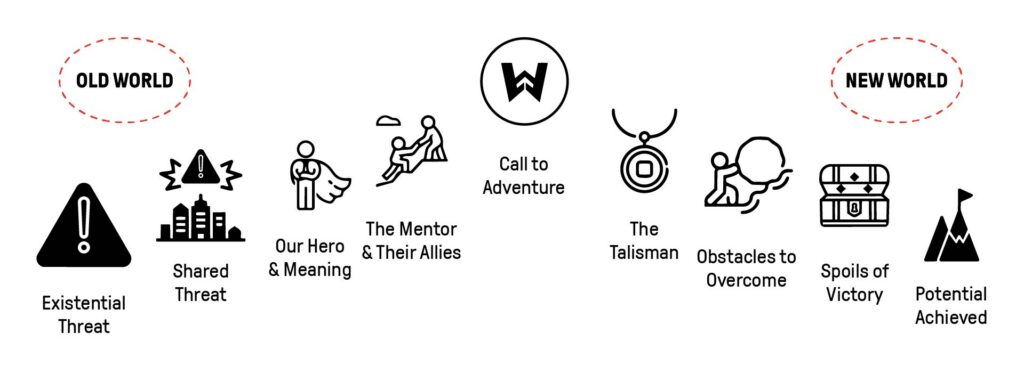
Woden’s StoryKernel is a proprietary strategic narrative framework built for B2B companies that need a single story to carry across every team, sales conversation, and stage of the customer journey. The process runs six weeks deep, drawing on research into a company’s customers, employees, competitors, and market, and it results in a nine-part, customer-centric narrative that becomes the foundation for everything else in the brand’s go-to-market strategy.
“Woden came up with the perfect tagline for us. Everyone says so. It reflects our unique position in the industry… they’ve certainly strengthened our brand… this year we’ve had more orders than any year since 2007.”
— Kerry Meacham, VP Sales and Marketing, Bush Hog | Read the Case Study
How It Helps Your Messaging
- Grounds every message in an unavoidable shift in the market that makes the cost of inaction clear
- Gives the customer a place in the story, positioning them as the hero and the brand as the mentor, so messaging never reads like the company talking about itself
- Sequences messaging across a nine-part narrative arc, so what gets said on the homepage, in a sales deck, and in a renewal conversation are different chapters of the same story
- Produces a Messaging Hierarchy that hands every team the exact language for describing the brand’s value
- Keeps sales conversations, marketing assets, and leadership communication saying the same thing, in the same voice, everywhere a buyer encounters the brand
Key Features
- Nine-part strategic narrative framework that every piece of messaging gets built from
- Messaging grounded in interviews with customers, employees, and partners
- Complete Messaging Hierarchy that turns the narrative into usable language for every team and every channel
- Designed for five or more years of messaging consistency as the market and the team change
- Backed by Woden’s guarantee: if we do not uncover what makes your brand essential, we will refund the full fee paid
What It Has That Punchy’s Doesn’t
Punchy makes the words simple and human, but the StoryKernel goes further by building the nine-part arc that builds urgency and establishes differentiation. It is then adapted into a Messaging Hierarchy that gives every team one story to describe the brand’s value. The Transformation Journey change management framework and StoryEngine, Woden’s proprietary AI platform, then keep that story from drifting long after the engagement ends.
See what Woden clients are saying on Clutch. | Connect with Woden on LinkedIn.
April Dunford
Best for: B2B tech companies that need to nail their positioning before building the messaging around it..
April Dunford is a positioning consultant and the author of Obviously Awesome, widely considered the definitive book on B2B product positioning. After 25 years as a repeat VP of Marketing at a series of venture-backed startups, she moved into consulting in 2015 and has since worked with more than 200 companies, from early-stage startups to Google and Epic Games.
“April’s approach helped our leadership team and sales and marketing team align around our differentiated value for the first time, finally moving from a feature focus.“
— CEO, B2B Tech Company | See Obviously Awesome reviews on Amazon
How She Tells Your Story
- Identifies the competitive alternatives buyers are actually comparing the product against
- Uncovers the unique attributes the product has that those alternatives lack
- Defines the value those attributes create for a specific set of buyers
- Determines the target customer characteristics that make the product an easy yes
- Places the product in the market category that makes its value obvious
Key Features
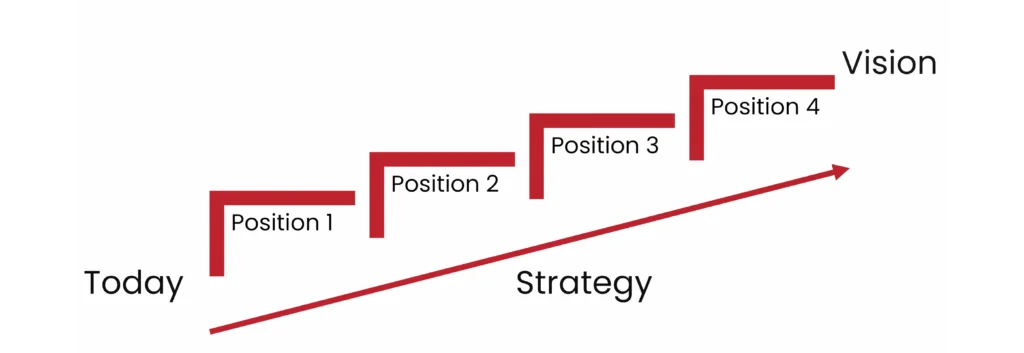
- Five-component positioning framework: competitive alternatives, unique attributes, value, target customer characteristics, and market category
- Built for B2B tech companies with complex products in crowded markets
- Designed to be completed collaboratively with the full leadership team
- Intensive workshop format, typically spanning several days
- Consulting engagements priced between $80,000 and $100,000 for larger organizations
Where It Falls Short
Dunford’s methodology produces exceptional positioning clarity, but the engagement ends there. It doesn’t carry that clarity into the sentence-level messaging, the sales deck, or the narrative arc a buyer moves through during a long, complex sales process. Punchy is more focused on messaging, sharpening the words themselves, but neither one builds the narrative infrastructure to keep that language consistent across a growing team. Dunford’s framework works best as the foundation for a deeper narrative or messaging engagement built on top of it.
Learn more about April Dunford’s positioning framework.
Andy Raskin’s Strategic Narrative
Best for: Venture-backed CEOs at growth-stage companies who need leadership-level alignment around a high-level narrative and have the internal infrastructure to translate that strategy into execution.
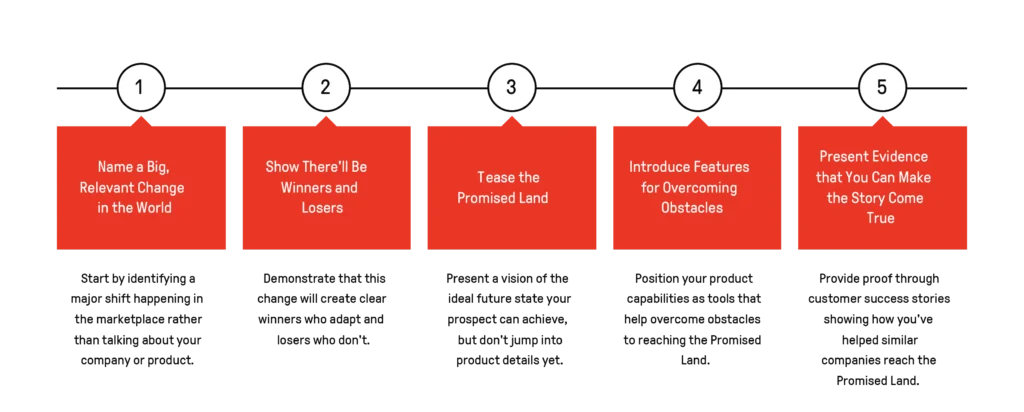
Andy Raskin has built a reputation as a strategic narrative consultant, with clients including Salesforce, Gong, Dropbox, Uber, and Intercom. He first drew wide attention for his viral breakdown of Zuora’s pitch deck, which emphasised his belief that the strongest pitches open with a shift happening in the world and not the product itself. That five-step approach has since become the standard for how B2B sales narrative gets established at the leadership level.
“Andy crafted new positioning and messaging for Amplitude that immediately increased our win rate and helped us gain traction faster with investors. We were really lucky to work with Andy, and I highly recommend him.“
— Spenser Skates, CEO and Founder, Amplitude
How HE Helps Your Messaging
- Opens by naming a big, relevant, and undeniable shift in the buyer’s world
- Shows winners and losers to create urgency through loss aversion and desirability
- Teases a promised land that is improbable without the brand’s guidance
- Introduces features as magic gifts that help the hero overcome obstacles to the promised land
- Closes with evidence last, after the story has already been believed
Key Features
- Five-step framework optimized for leadership alignment and high-stakes pitch narratives
- Built around the concept that CEOs must inspire both their own team and the organizations they sell to
- Deep expertise in venture-backed and enterprise-scale go-to-market narratives
- Highly selective engagement model working directly with CEOs and senior leadership
- Engagements start at $100,000 and above
Where It Falls Short
Raskin’s framework is built for high-stakes leadership conversations, not the day-to-day copy a growing team lives in. It doesn’t include the word-level messaging that a sales team, an email sequence, or a piece of collateral needs, and it doesn’t come with a research process for testing which specific language actually resonates with buyers. For companies whose real gap is jargon-heavy copywriting rather than a leadership narrative, Raskin’s model overshoots what the problem calls for.
Learn more about Andy Raskin’s Strategic Narrative.
SharpStance
Best for: Seed and Series A B2B startups that need lean, fast positioning and messaging before they can commit to a full narrative engagement.
SharpStance is a positioning and messaging consultancy founded by Jenna Alburger, built specifically for seed and Series A companies that have skipped the step of clearly defining their positioning while they were busy scaling. The engagement runs through a project kickoff, two positioning workshops covering best-fit customers, real competitors, points of differentiation, value themes, ideal customer profiles, and market category. There is also a final messaging stage that turns the strategy into a homepage wireframe and an updated sales pitch.
“Jenna helped us nail our product positioning and built a clear messaging strategy for our new launch. Now it’s easier to explain our value to customers, and we’ve seen an improvement in both sales and marketing activity.“
— Richard Roy, Chief Commercial Officer, Minisoft
How It Tells Your Story
- Gathers stakeholders from sales, marketing, product, and customer success before any positioning work begins
- Maps best-fit customers, real competitors, and points of differentiation in a dedicated workshop
- Defines value themes, ideal customer profiles, and market categories in a second session
- Translates the finished positioning into a homepage wireframe
- Updates the sales pitch so the team can start using the new story immediately
Key Features
- Founder-led positioning and messaging consultancy built for seed and Series A B2B startups
- Three-stage engagement: kickoff, positioning workshops, messaging development
- Deliverables include a positioning framework, messaging guidelines, homepage wireframe, and updated sales pitch
- Emphasizes an outside, unbiased perspective on a founder’s own product
- Custom-quoted, project-based pricing scaled for early-stage budgets
Where It Falls Short
SharpStance is built for a single-founder or small-team decision, not a multi-stakeholder buying committee or a large, distributed organization. Its engagement model is scoped around one company at one stage. It doesn’t include the change management infrastructure a company needs once the team grows past the people who sat in the original workshops, and it isn’t designed to hold up as the single narrative for five or more years of growth.
FletchPMM
Best for: Early-stage B2B SaaS companies that need a homepage rebuilt around a clear position, fast, and don’t need a multi-day workshop to get there.
FletchPMM is a product marketing consultancy founded in 2021 by Anthony Pierri and Robert Kaminski, built around a two-week, four-call sprint. The sprint runs a structured intake across the client’s website, demo, sales calls, and competitors, then generates four to six distinct positioning strategies, ranked by risk, before locking in one direction. That direction gets documented in a six-slide internal deck and translated into a homepage wireframe with production-ready copy, priced by company stage: $10,000 for early-stage companies under $2M in revenue, $20,000 for growth-stage companies, and $30,000 for mature companies over $20M.
“Fletch gave us the fish and taught us to fish. It was the most important investment to find message-market fit. Not only did we get a clear message, but also a framework that let us rapidly iterate as we searched for the right message.“
— Founder, B2B SaaS Company
How It Tells Your Story
- Runs a structured intake across the site, demo, sales calls, and competitors to surface exactly where the current positioning is breaking down
- Generates four to six distinct positioning strategies, ranked by risk, instead of committing to the first idea that sounds right
- Locks positioning to four foundational questions, what the product is, who it’s for, what it replaces, and why it’s better
- Documents the chosen position in a six-slide internal deck the team can reference beyond the homepage
- Ships the position directly into a homepage wireframe with production-ready copy within two weeks
Key Features
- Two-week, four-call sprint founded by Anthony Pierri and Robert Kaminski in 2021
- Tiered pricing by company stage, $10,000 to $30,000 depending on revenue
- Deliverables include four to six ranked positioning strategies, a six-slide positioning deck, and a homepage wireframe
- By design, doesn’t include customer interviews, relying instead on the client’s existing knowledge of their buyers
- Anthony Pierri ranked the top product marketing voice worldwide by Favikon
Where It Falls Short
FletchPMM is built to solve one problem fast, a homepage that doesn’t clearly say what the product does. It deliberately skips customer interviews, which keeps the sprint quick but means the positioning it produces reflects the client’s existing read of their buyers rather than anything tested against real conversations. And because the deliverable is a homepage and a slide deck, the positioning doesn’t automatically travel into the sales deck, the customer success handoff, or the language a rep uses on a call. Once the two-week sprint ends, there’s no mechanism to keep the positioning consistent as the market, the competition, or the product changes.
Choosing the Right Framework
APunchy’s methodology is the right choice for B2B tech companies that need clearer, more human language and don’t yet have a system for turning technical complexity into copy that resonates. For every other situation, the right alternative depends on what the organization actually needs:
- Need positioning clarity before messaging > April Dunford’s 5-Component Positioning Framework
- Leadership narrative that drives language later > Andy Raskin
- Need lean, fast positioning and messaging for a seed or Series A startup >SharpStance
- Need a self-serve template to hone your own language > StoryBrand
- Need a strategic narrative with clear, repeatable storytelling for your team > Woden’s StoryKernel
If you are a strategic B2B leader whose product requires the market to think differently about an existing problem, whose team is not telling a consistent story, or whose brand is losing deals to competitors with a lower price and a similar pitch, the StoryKernel is built exactly for you.
More than 300 B2B brands have used their StoryKernel to win more best-fit buyers for less. Want buyers to understand what makes you different?
Get Started: We Will Record an Analysis of Your Current Story