
“You know, you really don’t need a forensics team to get to the bottom of this.
If you guys were the inventors of Facebook, you’d have invented Facebook.”
The Social Network purports to be the origin story of Facebook: how Mark Zuckerberg started coding in his dorm room each night, and cravenly outmaneuvered his early partners to build the world’s most popular social network.
Your founding narrative may not be worthy of an Aaron Sorkin screenplay, and it’s unlikely that you’ll personally get the Lex Luthor treatment. But your business does have an origin story – and, if deployed correctly, it can arrest your audience as if David Fincher directed it himself.
The Psychology of Brand Storytelling: Why We Need Myths
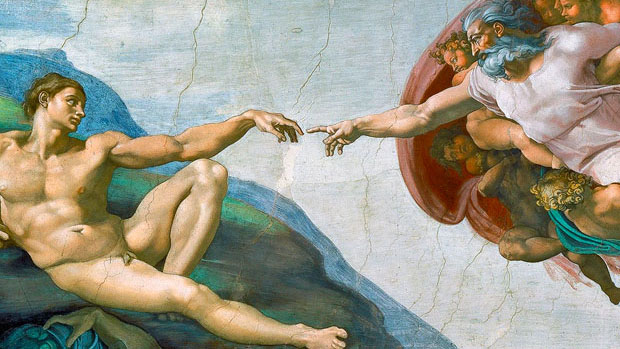
Creation myths were among the earliest stories to be passed along in the oral tradition. For early humans, the world was a mysterious place – full of phenomena beyond explanation. As these early people formed into tribes, leaders needed a way to explain the unexplainable, and establish shared values for their group. These narratives were more than tales that explained how the sun rose each day. They defined the purpose of community and explicitly worked to bind people together.
In Bruce Railsback’s compilation Creation Stories from Around the World, he identifies several consistent elements of the globe’s different creation myths: the superiority of the storyteller’s people, the establishment of core values for the community, an aspiration to a greater purpose, and a desire to understand the world.
The last point is not unique to creation myths, of course. Storytelling was developed primarily to communicate complex or abstract ideas that might not otherwise be understood. Creations stories weren’t meant to be literal explanations for the state of the world – just a shared method of understanding the audience’s role in it.
Establish Brand Values Through Narrative
Your brand’s origin story, its creation myth, functions in the same way.
The roots of the story are the shared values that define community. The Judeo-Christian myth instructs people to spread across the world the creator made for them. Japanese and Chinese creation myths establish the divinity of ruling people or classes. The Apache myth describes the symbiotic relationship between the tribe and nature.
For your business, this core value is the promise you make to your customers. Philadelphia coffee favorite La Colombe is built around the promise of bringing better coffee to America. So its origin story, based around founder Todd Carmichael’s global adventuring to find the best coffees in the world, works to not only inspire interest, but effectively reinforce the value behind the brand.
Why Your Origin Story Should Focus on the Community
While the founder is most often the protagonist of an origin story, it shouldn’t be about them beyond a superficial level. Rather, the founder works as an avatar for the audience.
The primacy of the community is important in creation myths. Hearing that they are the chosen people of the creator had the effect of empowering early audiences and binding them together. The effect can be similar when your audience hears your brand was created for them. When your audience sees something of themselves in the origin story, they believe in the importance of the brand.
Whitney Sales, the VP of Sales at TalentIQ, has a framework for how origin stories can be effectively used to fuel growth. Sales’ approach, which relies on establishing common ground, mirrors the structure used in the 21 different myths collected by Railsback.
Using Humble Beginnings to Humanize Your Brand
Think of the humble beginnings often described in creation myths for Hewlett-Packard (in a garage in Palo Alto), Google (another garage), or Facebook (a dorm room). These stories go beyond just the initial shared value in any brand story – they create a common ground around the problem the founders shared with their audience, and humanize the brand.
Most importantly, they provide a path to understanding. Microsoft’s path to software dominance is anything but linear. Yet, in the context of an origin story, it’s as simple as two college dropouts trying to analyze Washington state’s traffic patterns.
The final component of the creation story is an aspiration to a higher state, and the community’s collective role in achieving it. In early myths, this reflected the world in which the community lived, such as the Israelites’ Eden. Effective brand origin stories make their audience part of this aspiration, too.
How Apple Prioritizes Narrative Over Literal Accuracy
A piece of Apple’s origin story involves Steve Jobs’ experience taking calligraphy classes. It’s a story that effectively incorporates each element of the creation myth: it articulates the founder’s humble beginnings, communicates the “why” behind their brand (beautifully designed, intuitive to use products), and binds together a community of people who appreciate that sentiment over raw computing power. It’s a story that creates Apple’s gestalt, and inspires the community around it.
Most brands’ origin stories are not completely accurate – and that’s not required to be effective. It definitely took more than seven days to create the Earth, yet each Sunday millions of people file into church pews across the world.
Much more important than accuracy is alignment with the overall narrative your brand is attempting to instill in its audience. Origin stories are powerful ways to engage early adopters or provide guiding principles to employees, but they’re a tactical application in the same way that a customer anecdote is. In fact, Whitney Sales applies her model to customer stories in the exact way she does the origin story.
Turn Your Story into a Brand Parable
Your brand’s creation myth has the ability to be much more than a small anecdote that opens sales presentations. By aligning it with your overall brand narrative and deploying the framework of an effective origin story, it can evolve into a parable that inspires others to not just join your cause, but to preach it.