How companies use story to create alignment in strategic decision-making
When WarnerMedia and Discovery merged in 2022, the new company faced one of the most consequential decisions: brand strategy. The combined company now owned some of the most recognizable names in entertainment, including HBO, Discovery, TLC, and HGTV, and had to decide: what are the relationships among all these brands in the new company? Do they belong as separate products or just one streaming platform?
They opted for one integrated brand, and in 2023 dropped “HBO” from its streaming service to bring all the brands together as Max. On paper, it was the tidy answer, uniting numerous brands into one and giving customers one place for their affinity (and subscription dollars).
In practice, it diluted the brand that customers already trusted and vaporized centuries of collective brand equity. HBO was synonymous with high-quality programming, and replacing it with a new name (and diluting its service full of inferior entertainment) turned off customers.
Two years later, the company reversed course, and Max became HBO Max again. The other brands, like Warner Brothers studio, are still trying to recover (box office receipts are down 76 percent year-over-year).
Aligning Your Post-M&A Strategy Around a Shared Brand Story
Any company that has gone through M&A activity faces strategic decisions like this with that have long-term impacts on the brand. Whether it’s how to structure the organization or how to organize products, these choices ripple across the entire company.
Warner Brothers Discovery was able to unwind its decision about HBO. But for many companies, these types of strategic decisions are what Jeff Bezos calls “one-way doors:” decisions so consequential they cannot be easily undone.
Most companies lack a defined framework for making these decisions. When pressure hits, the company chooses based on the experience of leaders or vocal customers because they lack the anchor of a strategic narrative.
Brands that have a defined story at the center of their company have a clear understanding of what the status quo of their customers’ world is, what they believe about that change that others don’t, and how they’re going to guide customers through it.
This is the framework for strategic decision-making. The strategic narrative answers the hardest question—what the company believes and where it’s going—and gives a shared way of analyzing and reaching the right decisions for the business.
How You Know It’s Time to Make a Big Decision
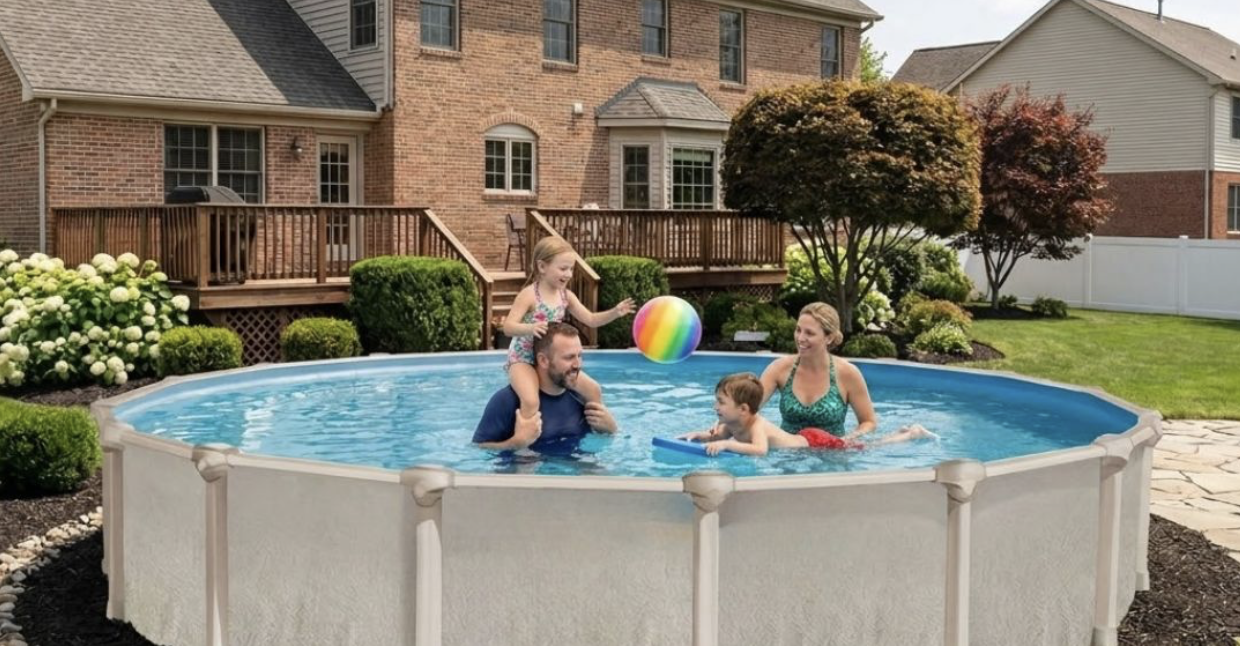
Wilbar Group is the largest above ground pool manufacturer in North America. A series of acquisitions over six decades has left Wilbar with nine individual brands that all have their own disparate messaging and go-to-market strategy, alongside three manufacturing facilities that each have their own staff.
Wilbar was recently funded by a PE firm and brought on a new CEO who was struggling with the key organizational issue of how Wilbar should go to market. They recognized the confusion the nine brands had internally with employees and externally with Wilbar’s dealer network, the retailers who choose which pools to stock in their showroom and walk families through the purchase. This confusion had resulted in each brand becoming essentially meaningless in the market. Wilbar’s first priority was to get an answer on three core questions: what brands should Wilbar go to market as, who is each brand for, and what does each brand stand for?
These questions sit at the core of brand strategy: do you go to market as a house of brands or as a branded house? In a house of brands, each brand stands on its own with its own name, audience, and story, the way Procter & Gamble runs Tide and Pampers. In a branded house, everything goes to market under one master brand, the way Apple sells the iPhone, iPad, and Mac as Apple products first and individual devices second. Neither model is right for every company, but the choice shapes nearly everything that follows: where marketing dollars go, how sales teams and partners sell, how the organization is structured, and what customers believe the company stands for.
For Wilbar, the stakes were especially high. Their dealers were trying to sell nine brands with nine different messages, and many couldn’t explain how one differed from the next, let alone help a family choose between them. Inside the company, three manufacturing facilities each had their own staff and their own sense of which brands mattered most. With new PE backing and a new CEO focused on growth, this decision would set how Wilbar went to market for years to come. The answer would determine whether its 60 years of acquisitions added up to a real advantage or stayed a source of confusion for employees, dealers, and the families they served.
Many companies lean on numbers, comparing revenue, margin, and brand awareness across the portfolios. This is the approach Wilbar took at first, too. But treating the question solely as a numbers game quickly ran into the trap of ownership. Every brand had an internal champion, every champion had a metric that made their brand look essential, and the conversation turned into defense and finger-pointing. These numbers are important, but they don’t answer the question of who Wilbar is at its core. Without that answer, no decision was going to result in full organizational alignment.
Storytelling as a Framework for Strategic Decision Making
The research and interviews behind the story is what gave Wilbar’s leaders the confidence to act on it. Leadership, employees, and dealers each saw a different part of the business, and the strategic narrative brought these perspectives into a single narrative.
Woden built Wilbar’s StoryKernel, Woden’s proprietary process for creating a strategic narrative, around a simple belief: there is a perfect pool for every family.
There is a critical gap in the pool industry: seventy-two percent of adults say their dream home includes a pool, yet only about eight percent of U.S. households have one. Price and maintenance explain part of that, but the interviews conducted with key stakeeholders kept surfacing something bigger: a stigma around above ground pools built on an image that’s years out of date. Most families never walk into a dealer because they’ve already decided there’s nothing there for them.
Because of this, Wilbar’s story is built around the person who never asked for the pool in the first place. They’re the pragmatist in the room, weighing resale value, upkeep, and what happens once their kids are grown. What moves them is the idea of a backyard their kids choose over anywhere else.
Wilbar’s role in the story is to help dealers support this homeowner. Sixty-plus years of acquisitions produced the widest range in the category, covering every size, material, and color, paired with regional market knowledge that equips dealers to match each family to the right pool. The cautious buyer finds a pool that fits their budget, yard, and vision without compromise. The payoff is a home investment the whole family uses, together, year after year.
This story answers the three questions every strategic decision depends on. It named the status quo: more families want a pool than ever, but an outdated image of above ground pools keeps most from ever walking into a dealer. It defined what Wilbar believes: there is a perfect pool for every family, and the gap between wanting a pool and owning one can close. And it made clear how Wilbar would guide families through that change: by equipping dealers with the range and knowledge to match each family to the right pool.
Your Story is Your Strategy
Woden brought the story to Wilbar’s leadership team in a StorySeminar, a working session where executives pressure-test their narrative together. When the house of brands versus branded house question was examined through the lens of that story, the answer was clear.
Within about 45 minutes, the leadership team reached unanimous agreement on both the story and the move to a branded house. The facts hadn’t changed, but when examined through the lens of the story, they pointed everyone in the same direction. Instead of asking which brand deserved to survive, the team asked which structure best delivered the promise of a perfect pool for every family. Every leader could measure the options against that same standard, and the answer became obvious to everyone at once.
Under a house of brands, Wilbar’s greatest strengths, its breadth of pools and depth of knowledge, became scattered across names that each told a fraction of the story. The promise of a perfect pool for every family only holds as proof when it all lives under one name. A branded house turns nine product lines into one coherent brand, giving dealers a single story to tell.
The leaders had shaped and tested the story themselves, and they left the room as owners of the decision. The strengths each of them had been championing became proof points in a bigger story they all believed in. That ownership is what turned agreement into momentum, and it gave each leader a clear way to carry the decision back to their teams.
Implementing a Story-Driven Strategy
Since then, the StoryKernel has become the blueprint for a transformation that’s still unfolding at Wilbar, starting inside the company and moving outward to the dealer network.
To bring the story to the team, Wilbar’s leadership shared it through company-wide and team-level conversations. Every department hears the same story, framed around the role it plays in delivering it, so employees across sales, production, and service each see how their work connects to putting the perfect pool in every family’s backyard.
Next, the story moves outward. Dealer communication comes first, giving Wilbar’s network one brand and one story to sell, followed by consumer-facing activation in time for the next pool season. Each phase builds on the one before it, and the story will stay at the center of every future decision, from product launches to acquisitions to go-to-market choices.
Slowing Down to Make Smarter, Unified Decisions
Wilbar’s StoryKernel transformed a stalled decision into clear focus. Most companies meet big decisions reactively, but companies that know their story already know why they exist, what they believe that others don’t, and how the whole organization aligns around it. That’s what makes narrative a decision-making framework: hard decisions get clearer, and they only have to be made once.
Warner Brothers almost destroyed the HBO brand because it made a decision that looked good on paper, but didn’t respect the strategy of the brand or what customers expected from it. Wilbar paused, focused on its story first, and gained a decision-making framework that not only landed them in the right place, but did it in a way that prepared the entire team to execute it.
When describing his “one-way door” decision-making criteria, Bezos noted he was often Amazon’s “chief slowdown officer.” He felt that when a significant strategic decision was to be made, it often benefitted the company—known otherwise for moving quickly—to analyze it from additional angles and consider other viewpoints.
The StoryKernel is a way to integrate those angles and viewpoints coherently and align them with why your brand is valued in the first place. If the leadership team can’t answer three questions in the same way—“What is the status quo we’re challenging for our customers? What do we believe is changing that others do not? And how are we guiding customers through that change?”—the brand isn’t ready to make the big strategic decisions in front of it. Instead, focus on using the story to shape your strategy, and the decisions that follow will have something to stand on.